
One Health

Communicable diseases remain one of the major causes of mortality worldwide. There are disparities in the numbers of individuals affected by disease between low-and-middle-income countries and those in developed nations. Despite the biological and clinical knowledge of health and disease expanding every single day, people are still dramatically affected by treatable and curable diseases across the world, every single day.
Microorganisms are often associated closely with disease, commonly as a causative agent. However, it is essential to recognise that microbes are also an essential tool in the treatment and prevention of a wide range of diseases. Microbes will play in important role in drug discovery: producing anticancer drugs and antimicrobials. Applying One Health principles, to understand the interaction of pathogens and the human host, development of diagnostics, treatments, and disease prevention, applied microbiologists can shape global health and wellbeing outcomes.
Read the latest research on one health from AMI’s journals here.
One Health Advisory Group members

Sally Cutler
Sally's passion for microbiology started with a BSc degree course from University College London from which she graduated in 1981. Her research interests are largely focussed upon spirochaetes and bacterial zoonoses, particularly those with an impact upon developing countries. Sally has been a member of AMI since the days when it was the Society for Applied Bacteriology.

Kate Lagerstrom
Kate recently completed her PhD in Biology at Stanford University where she studied the genetic diversity of distribution of Escherichia coli among a wild animal community. She will soon begin a post-doctoral research position at Princeton University where she will continue to study human impacts on host-associated microbial communities. Since 2024, Kate has served as a trustee on AMI's Executive Committee.

Lesley Oglive
Lesley is Director of the Secretariat at the Global AMR R&D Hub, a global partnership focused on addressing challenges and improving co-ordination and collaboration in AMR R&D using a One Health approach. She has over 15 years-experience working in academia as a researcher and lecturer at the University of Brighton and the Max Planck Institute for Molecular Genetics, focused on the human gut virome and the discovery and characterisation of therapeutic phage. Lesley represents the Global AMR R&D Hub on a number of advisory groups, including for the World Health Organisation and the European Commission.

Olufemi Samuel Amoo
Dr Olufemi Samuel Amoo is a researcher at the Nigerian Institute of Medical Research specialising in infectious diseases, genomics and host–pathogen interactions. His research spans viral disease surveillance, molecular epidemiology and bioinformatics, including work on Lassa fever and COVID-19, supporting improved understanding, detection and control of emerging infectious diseases.

Elaine Cloutman-Green
Dr Elaine Cloutman-Green has worked as a Clinical Scientist since 2004. In 2015 she completed a PhD under the NIHR CSO Doctoral Fellowship scheme and her research on prevention of healthcare associated infection led to an NIHR ICA Clinical Lectureship award in 2016. In 2015 she was appointed the first UK based International Ambassador for the Society of Healthcare Epidemiology of America. In 2016 she became a Fellow of the Higher Education Academy, Royal College of Pathologists and was appointed as a NICE Expert. She represents Healthcare Scientists as part of the ACB, and as Country Ambassador for the American Society of Microbiology.
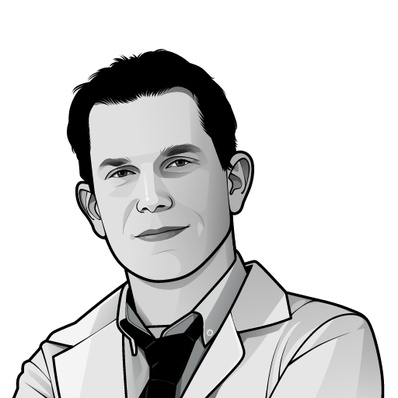
Tomasz Jarzembowski
Dr Tomasz Jarzembowski is a microbiologist at the Medical University of Gdańsk, Poland. His research focuses on antimicrobial resistance, bacterial biofilms, virulence and host–microbe interactions. His work investigates mechanisms underlying bacterial infections and resistance, supporting improved diagnostics and contributing to efforts to understand and address antimicrobial resistance and infectious disease.

Sarah Hooper
An enthusiastic, self-motivated microbiologist and principle investigator with extensive expertise in the field of infectious disease, a good publication record and significant experience in the design, execution and management of research projects.

Adam Roberts
Graduated in Applied Biology from Coventry University in 1995 and with a PhD in molecular microbiology from the University of London in 2002. Worked as a Post-Doctoral Research Fellow, Lecturer and Senior Lecturer at University College London until joining LSTM in February 2017. His research activities focus on the emergence and spread of antimicrobial resistance amongst bacteria and the development of new drugs in order to treat infections. He is an advisor to the Longitude Prize and the Royal Society of Hygiene and Tropical Medicine, runs The Transposon Registry(opens in a new tab) and co-ordinates the JPIAMR funded Network of European and African Researchers on AMR (NEAR-AMR(link is external)(opens in a new tab)).

Filipa Godoy-Vitorino
Dr Filipa Godoy-Vitorino is a Professor of Microbiology at the University of Puerto Rico specialising in microbial ecology and microbiomes. Her research explores host–microbe interactions across humans, animals and diverse environments, using metagenomics and multi-omics to understand microbial community dynamics, disease and biodiversity, connecting human health with wider ecosystem health.

James Ebdon
Prof James Ebdon is an Environmental Microbiologist interested in the role of water in the spread and control of water-related diseases. He is particularly interested in how we can protect human health and the aquatic environment. His teaching and research focus on three main areas: (i) the monitoring and provision of safe water and sanitation in low-resource settings; (ii) the behaviour of microorganisms (bacteria and viruses (including phages) in engineered and natural environments; and (iii) the development and application of innovative, low-cost methods for assessing water quality and treatment efficacy. In Malawi, he worked on a UNICEF-funded 'Assessment of Drinking Water Quality in Rural Areas' which led to the re-design and improved management of rural wells, providing low-income communities with safer drinking water. More recently, he was involved in a Gates Foundation-funded project in India 'SaniPath Typhoid' which sought to enhance understanding of typhoid transmission pathways in India’s mega-slums (Kolkata).
He is currently leading an ELRHA-funded collaboration with the International NGO Médecins Sans Frontières (MSF) at the Rohingya refugee camp, Cox’s Bazar, Bangladesh which is optimising the chemical treatment of human faecal waste during the onset of humanitarian crises.
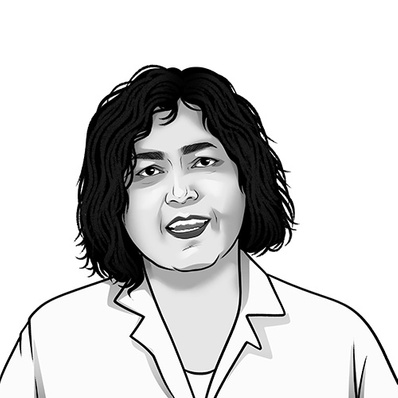
Guadalupe Virginia Nevarez Moorillon
Dr. Nevárez-Moorillón has been a full-time professor at the School of Chemical Sciences, Autonomous University of Chihuahua, Mexico, for the last 35 years. She graduated as a bacteriological chemist from the Autonomous University of Chihuahua. She completed her Ph.D. in Biology from the University of North Texas studying the bioremediation of soil contaminated with hydrocarbons, under the supervision of Dr. Gerard Roland Vela. She is a member of the National Outstanding Researchers System of Mexico (Level II) and has been granted the National Award on Food Science and Technology. She is also a regular member of the Mexican Academy of Sciences.
Her research interests include environmental microbiology, as well as predictive microbiology applied to food systems, the role of lactic acid bacteria in traditional fermented foods, and antimicrobial properties of spices, such as clove and oregano. Under her supervision, more than 50 undergraduate students, as well as more than 50 master students and 15 doctoral students have completed their degrees.
Dr. Nevárez-Moorillón also serves as AMI's Global Ambassador for Mexico.

Sandeep Gupta
Dr Sandeep Gupta is a Senior Scientist at AgResearch specialising in immunology, molecular biology and animal infectious diseases. His research develops vaccines, alternative therapeutics and advanced molecular diagnostics for bacterial and viral pathogens. Using CRISPR/Cas technologies and disease biomarkers, his work supports animal health, disease surveillance and sustainable livestock systems.
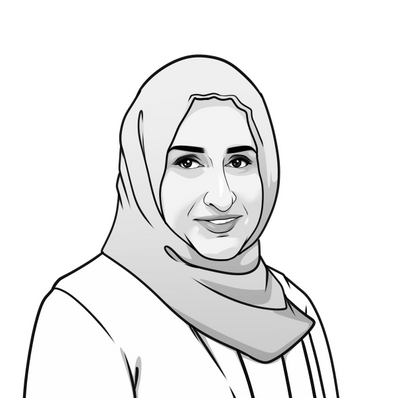
Delveen Ibrahim
Since 2006, I have been a lecturer at the University of Duhok in the Biology Department of the College of Science. My PhD in Microbiology from Nottingham University in the UK was awarded to me in 2017. My doctoral research focused on ESBL-producing E. coli and multi-drug resistance. This study involved phenotypic evaluation of the selected isolates, molecular characterization of several resistance genes, whole genome sequencing of selected strains to examine the genetic and genomic context surrounding -lactamase genes. My goal is to better understand how bacteria are killed by current and previous antimicrobial treatments, as well as how bacteria develop resistance to them. Currently, I am a Global ambassador for AMI and a junior editor for Letters in Applied Microbiology (LAM) journal.

Neelesh Sharma
Professor Neelesh Sharma is a veterinary scientist at Sher-e-Kashmir University of Agricultural Sciences and Technology of Jammu (SKUAST-Jammu), India. His research focuses on animal health, antimicrobial resistance, mastitis and infectious diseases. His work promotes responsible antimicrobial use, alternative therapies and One Health approaches to improving livestock health and sustainable animal production.

Zina Alfahl
Lecturer in Pharmacology & Therapeutics at the University of Galway, specialising in antimicrobial resistance, respiratory infection, and microbial ecology. Her research focuses on improving the detection and management of airway infections, particularly in cystic fibrosis, through molecular diagnostics, microbiome analysis, and antimicrobial stewardship.
- X:
- @AlfahlZina

Mohsin Khurshid
Dr Mohsin Khurshid is an Associate Professor of Microbiology at Government College University Faisalabad, Pakistan. His research focuses on antimicrobial resistance, infectious diseases and molecular diagnostics. He investigates multidrug-resistant pathogens across human, animal, food and environmental settings, supporting improved surveillance, antimicrobial stewardship and integrated One Health approaches to disease prevention.

Blessing Mbaebie Oyedemi
Dr Blessing Mbaebie Oyedemi is a research fellow at Nottingham Trent University with research interest in natural product drug discovery for molecular mechanisms of antimicrobial resistance research (AMR), both in academia and clinical research settings. As an AMI member, her passion resonates as an advocate for sustainable antimicrobial interventions through research, strengthening education and promoting policy.
She believes strongly in the values of AMI and the opportunities provided to all levels of scientists, researchers, and all public walks of life to be a change agent trying to solve everyday challenges and influence change through microbiology

Supram Hosuru Subramanya
Dr. Supram's research interests include infectious diseases and antimicrobial resistance. His main focus is on genomic one-health surveillance and understanding in-depth how multi-drug resistant bacteria (MDRs) colonize and infect humans in order to provide the best possible healthcare. He has collaborated with researchers around the world. Supram has published more than 50 peer-reviewed articles. Currently, he is an Associate Editor for journals such as Journal of Antimicrobial Chemotherapy-Antimicrobial Resistance (JAC-AMR) and PLOS ONE. He has received more than 20 awards from various international scientific societies. Having demonstrated excellence in research and commitment to advancing healthcare epidemiology, infection prevention, and diagnostics in LMICs, Supram was appointed as an International Young Ambassador of Science by the American Society for Microbiology (ASM) and the Society for Healthcare Epidemiology of America (SHEA). In his previous position as assistant professor of microbiology at Manipal College of Medical Science, Nepal, he oversaw the diagnostic microbiology laboratory in addition to teaching medical students.
Upon obtaining his bachelor and master of science degrees in medical microbiology, Supram did his doctoral research on the AMR one-health approach and received his Ph.D. from the Manipal Academy of Higher Education, India.

Pamela Ferretti
Dr Pamela Ferretti is a postdoctoral researcher at the University of Chicago specialising in microbiome transmission and host–microbe interactions. Her research explores human and wildlife microbiomes, antimicrobial resistance and microbial transmission across social and environmental settings, advancing understanding of how interconnected microbial communities influence human, animal and environmental health.

Ismail Ayoade Odetokun
Professor Ismail Ayoade Odetokun is a veterinary public health researcher at the University of Ilorin, Nigeria. His research focuses on antimicrobial resistance, infectious disease epidemiology, zoonoses and food safety. His work applies a One Health approach to understanding disease and antimicrobial use across human, animal, food and environmental systems.

Burkhard Tümmler
Burkhard Tümmler received his doctorates in the fields of physical chemistry and human genetics in 1979 and 1984 respectively. After a research stay at the Hospital for Sick Children in Toronto, he worked at the Institute for Biophysical Chemistry of the Hannover Medical School from 1983, and habilitated in 1991 in the field of biochemistry. Having the personal history of many years of basic, translational and clinical research on cystic fibrosis, he currently investigates the population biology, genomics, pathogenicity and physiology of Pseudomonas aeruginosa and studies the airway microbial metagenome in health and chronic lung diseases such as asthma, bronchiectasis or cystic fibrosis.
Research interests: cystic fibrosis; respiratory infections; chronic lung disease; airway microbiome; Pseudomonas aeruginosa; Pseudomonas genomics; next generation sequencing

Hannah Trivett
Hannah completed her undergraduate degree in Microbiology in 2020 and recently completed her PhD in Medical Microbiology at the University of Liverpool. Her PhD investigated the utility of long-read metagenomics and Hi-C sequencing to resolve closely related organisms found within the gastrointestinal tract and the feasibility of integrating metagenomics into infectious disease diagnostic workflows. Her PhD included a qualitative study to explore the current infectious disease diagnostic landscape and the practicalities of integrating metagenomics for routine use in clinical microbiology laboratories.
In 2024 Hannah joined the Hall Lab as a Research Fellow at the University of Birmingham to explore microbe-microbe interactions using experimental and bioinformatic approaches across several human microbiomes, including the vaginal and gut microbiome and their impact on human health.
Ready to make an impact?
If you would like apply to be involved in an AMI Advisory Group, then please complete the form below. Alternatively, if you would like to more information, please get in touch with [email protected]
Applications to become an AMI Advisory Group member are currently closed.