Whole-genome sequencing is a powerful tool that can pick up on genetic signatures for antimicrobial resistance in UTIs: research
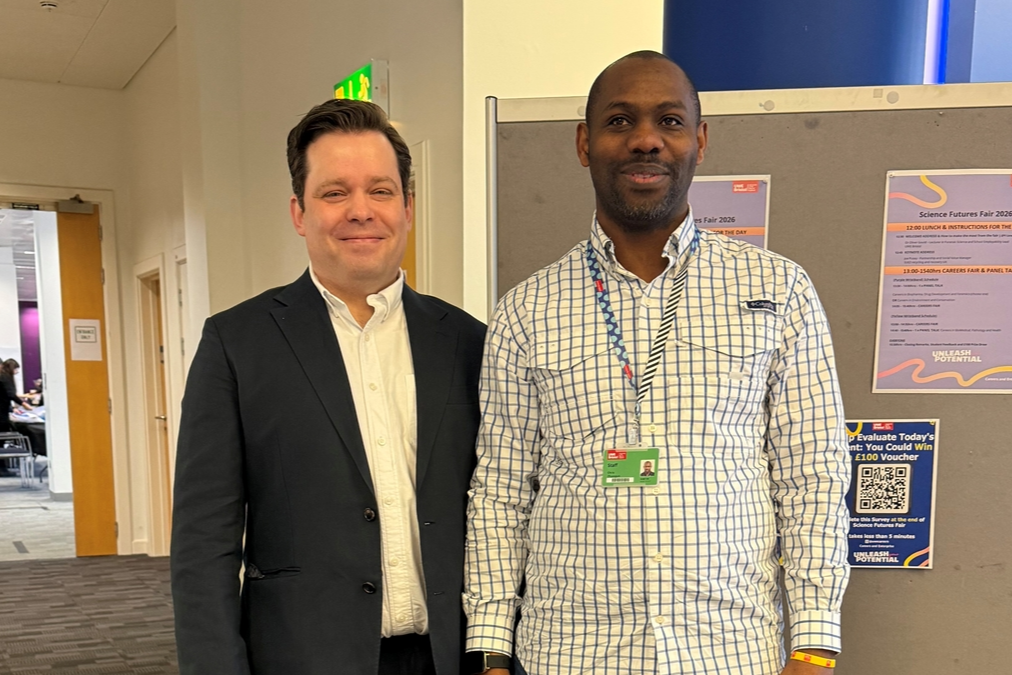
Pharmacist Oluseye Chris Olusegun, a postgraduate researcher (Final year PhD student) from the University of the West of England, said his findings reveal whole-genome sequencing, or WGS, as a powerful technology that could change the way we monitor and control antibiotic resistance in clinical microbiology laboratories.
“Not only does it provide us with information on which antimicrobial drugs are ineffective, but also how resistance occurs and how it could be transmitted,” he said.
The research will be highlighted at the Minoritised Life Scientists Future Forum (MLSFF26) at Edinburgh International Conference Centre from March 23 to 25. MLSFF26 is the only major conference in Europe dedicated to supporting and showcasing the contributions of marginalised and underrepresented communities in the life sciences.
The science conference is expected to attract hundreds of scientists to Edinburgh. With the city’s remarkable history of scientific invention and discovery, it’s the ideal location for young scientists to share their own breakthroughs.
Genetic signatures
“Our study has demonstrated that whole-genome sequencing (WGS) can reliably distinguish between antibiotic-resistant and susceptible strains of the three major uropathogens; Escherichia coli, Klebsiella pneumoniae, and Proteus mirabilis by identifying the specific genetic signatures that confer resistance, Pharmacist Olusegun said.
“We found that resistant strains harbour clinically significant acquired resistance genes (such as carbapenemases including blaGES‑5 and KPC‑3, and extended-spectrum beta-lactamases like CTX‑M‑15/71) and key chromosomal mutations (particularly in gyrA/parC genes conferring fluoroquinolone resistance), all of which were consistently absent in susceptible strains.
“This research, which was undertaken at the University of the West of England and finalized in late 2025, offers compelling evidence of the potential that genomic surveillance may have to revolutionize the management of antimicrobial resistance in urinary tract infections.”
Global threat
Urinary tract infections affect approximately 150 million people globally each year, and antimicrobial resistance is rendering many of our first-line antibiotics ineffective. The problem is particularly pronounced for uropathogens, for which resistance to multiple antibiotic classes is increasingly common, contributing to therapeutic failures, prolonged illness, and increased healthcare costs.
Traditional laboratory methods tell us whether a bacterium is resistant, but don't tell us why or how: information that is crucial for tracking the spread of resistance and for guiding effective treatment.
The researchers wanted to find out whether whole-genome sequencing could provide that missing information by revealing the complete genetic picture the “resistome” of these pathogens, and whether resistant and susceptible strains could be reliably distinguished at the genetic level.
They analysed six well-characterised isolates from the University of the West of England culture collection: paired resistant and susceptible strains of Escherichia coli, Klebsiella pneumoniae, and Proteus mirabilis. After extracting the DNA, they partnered with MicrobesNG to perform Illumina sequencing, generating high-quality genomic data with excellent coverage.
Bioinformatics tools
They then used sophisticated bioinformatics tools, specifically the Resistance Gene Identifier (RGI) from the Comprehensive Antibiotic Resistance Database and ResFinder to screen for known resistance genes and chromosomal mutations, applying strict confidence thresholds to ensure our findings were robust.
“What we discovered was striking. The resistant strains carried an arsenal of high-impact resistance genes that were completely absent from their susceptible counterparts,” Pharmacist Olusegun said.
“The resistant E. coli harboured the carbapenemase gene blaGES‑5 (which destroys carbapenems, our last-resort antibiotics) alongside the ESBL gene blaCTX‑M‑71 and mutations in gyrA/parC that confer fluoroquinolone resistance.
“The resistant Klebsiella pneumoniae carried KPC‑3 (another devastating carbapenemase) alongside porin mutations that reduce drug entry into the cell and multiple genes conferring resistance to aminoglycosides, macrolides, and trimethoprim.
“The resistant Proteus mirabilis possessed an equally concerning profile including blaCTX‑M‑15, qnrB1 (which protects the bacterial DNA from fluoroquinolones), and aac(6')-Ib-cr (which modifies both aminoglycosides and fluoroquinolones).
“The susceptible strains, by contrast, contained only intrinsic efflux systems and regulatory genes, the normal genetic background of these bacteria that does not, on its own, produce clinical resistance.”
Surprising findings
Two findings proved particularly surprising: First, even the susceptible strains carried genes that could contribute to resistance under the right circumstances, such as efflux pumps and regulatory systems, but these remained silent or expressed at levels too low to matter clinically.
This highlights that the presence of a resistance-related gene doesn't automatically equate to resistance; context and expression levels are critical.
Second, despite one of the Proteus mirabilis samples having a lower read count than ideal, the researchers were still able to confidently detect key resistance genes including blaTEM‑1B and sul1.
This demonstrates that samples with moderate levels of sequencing depth can produce significant genetic information, and this is significant in relation to how we can improve the accessibility of genomic surveillance in resource-constrained settings.
Proof-of-concept
“While our study provides proof-of-concept that WGS can distinguish resistant from susceptible uropathogens, several important steps remain. First, we need to expand this work to larger collections of isolates to understand the full diversity of resistance mechanisms circulating in clinical settings,” Pharmacist Olusegun said.
“Second, we need to integrate genomic data with precise phenotypic measurements to better understand the relationship between specific gene combinations and actual resistance levels.
“Third, and perhaps most importantly, we need to track the mobile genetic elements; plasmids, transposons, and integrons that carry these resistance genes between bacteria, because understanding how resistance spreads is as important as understanding how it works.
“Finally, we need to work with clinical colleagues to develop practical, cost-effective pathways for implementing WGS-based surveillance in routine diagnostic laboratories.”
This research was led by Pharmacist Olusegun Oluseye Chris and Katherine Thomas at the University of the West of England, with supervision from Dr Oliver Gould, Dr Ben de lacy Costello, and Dr Jackie Barnett. The study was supported by the University of the West of England's culture collection, which provided the well-characterised isolates, and by MicrobesNG, who performed the sequencing.
Find out more about MLS Future Forum HERE.