
We welcome abstract submissions relating to molecular microbiology and microbial ecology, including biogeochemical cycling, host-microbe interactions, environmental and animal (inc. human) microbiomes and applied microbiology.
You can request a 15-minute oral presentation (12-min talk & 3-min Q&A) or a poster presentation. There will be two poster sessions, one on each day. Prizes will be awarded for best in each category.
Submissions should be structured to include:
- Background
- Hypothesis
- Methods and Results
- Conclusions
This is your space to share what you’ve been working on, and we can’t wait to hear about it. Click the button below to submit your abstract now!
Key dates
24 August 2026 - Abstract submission opens
27 September - Abstract submission closes
w/c 19 October 2026 - Submitters notified
Abstract guidelines
Student Travel Bursary
Financial support is available to AMI Members via the AMI Student Travel Bursary Non-members who attended MMEG 2023/24/25, and those registered to attend MMEG 2026, get 50% off AMI membership. The discount will be automatically applied at checkout. We encourage bursary applicants to seek supervisor/department support first so we can prioritise those who need it most. Preference is given to those who have submitted an abstract.
15-minute talk guidelines
You’ll have 15 minutes in total - 12 minutes for your presentation with 3 minutes set aside for questions from the audience.
This is your space to share what you’ve been working on with a friendly group of early career researchers. Whether it’s a finished project or still a work in progress, we’re excited to hear about it.
What we're looking for:
-
A clear explanation of your research and why it matters
-
A focused talk that walks us through the key points or findings
-
A simple, logical structure from start to finish
-
Slides that support what you’re saying (without trying to say everything for you)
-
Enthusiastic and confident delivery
-
Awareness of the audience – if you need to use specialist terms, give them some context
Tips:
-
Keep the talk itself to 12 minutes so there’s time for questions
-
Practise once or twice to get your timing right
-
Think about what you want people to remember most
-
You don’t need to cover everything – keep it clear and engaging
No need for polished perfection – just your science, shared in a way others can connect with and learn from.
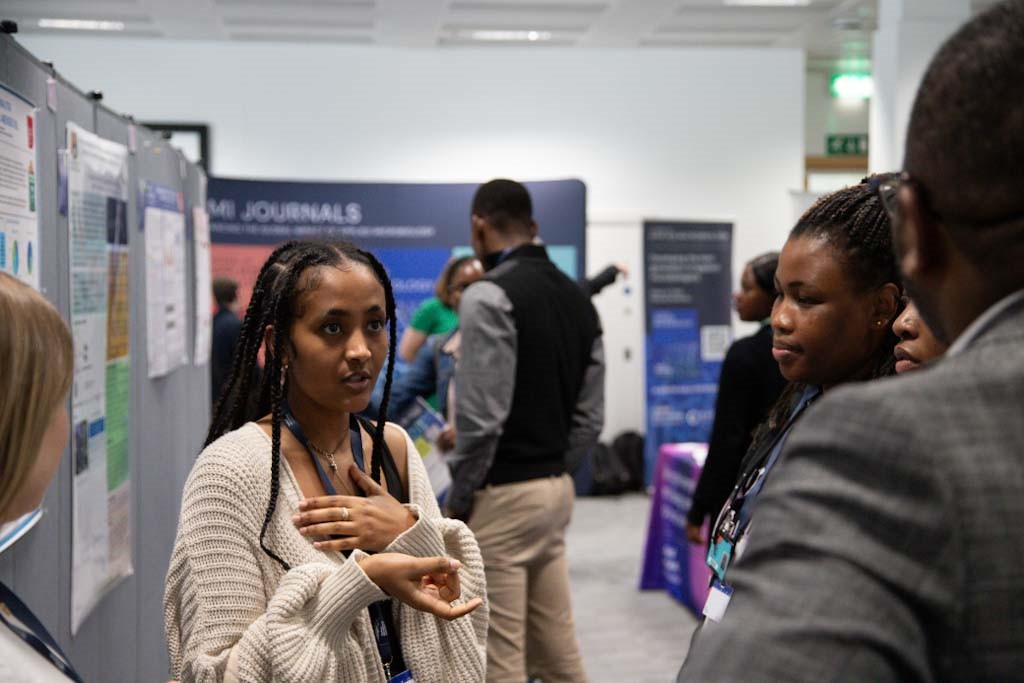
Poster presentation guidelines
Here's what you need to know about presenting a poster:
- Preferred size: A0 (1189 mm height x 841 mm width)
- Fixing materials: Velcro and pins will be provided on the day
Tips for your poster:
-
Keep it clear, visual and easy to read from a distance
-
Use bullet points, graphs and illustrations where possible
-
Don’t overcrowd it – less is more
-
Include your name, title, institution and contact details
We know for many of you this might be your first time – don’t worry, this is a welcoming and safe space and a great chance to share your work and practise chatting about your research.
This is your space to share what you’ve been working on. We can’t wait to hear about it!
